
I Didn’t Research the Western World I Write About. I Lived It.
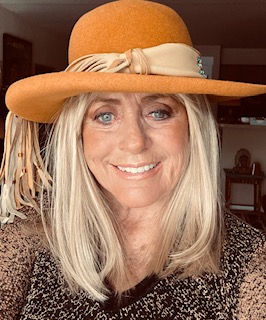
There is a difference between researching a world and remembering one. When I write about ranches, rodeos, bucking bulls, cowboys, small towns, long drives, financial risks, unpredictable animals, and people whose word can still mean something, I don’t have to imagine what that world feels like. I lived it.
My connection to the Western way of life began long before I ever thought about writing a screenplay. I was raised with rodeo in my blood. My grandfather, Leo Moomaw, was one of the founders of the Omak Stampede in Washington State, and the values of that world, independence, determination, hard work, and the ability to get back up when life knocks you down, became part of me.
Life took me in other directions first. I attended business college in the Seattle area, worked as a paralegal and law office manager, became involved in the automobile business, raised a family, and built a life that, from the outside, probably looked settled and successful. Then, after the collapse of my twenty-year marriage, I found myself beginning again at a point in life when I certainly hadn’t planned on starting over.
Then I met a cowboy, and that chance encounter eventually carried me hundreds of miles from the life I knew to a 3,400-acre ranch near a tiny Oklahoma town with a name that would ultimately mean far more to me than a dot on a map, Freedom.
Thirteen Years That Changed Everything
I didn’t arrive in Oklahoma knowing how profoundly those years would change me. I became involved in raising rodeo bucking bulls and learned the rhythm of ranch life, the excitement behind the chutes, the personalities of the animals and cowboys, and the realities of hauling bulls down endless highways and waiting to see whether years of breeding and training would produce an extraordinary animal.
I also learned that the romantic image of ranch life and the reality are very different things. Ranches require money. Animals don’t care whether you’re tired. Weather doesn’t care about your plans. Equipment breaks, people disappoint you, and dreams often cost far more than expected. Sometimes the person standing beside you becomes both the reason you keep going and one of the greatest challenges you will ever face.
During those thirteen years, we didn’t simply live on a ranch, we dreamed bigger. I became involved in building a Western guest ranch, lodge, restaurant, and rodeo arena. There were celebrations, setbacks, friendships, arguments, successes, failures, laughter, heartbreak, and moments so extraordinary I couldn’t have invented them if I tried. At the time, I didn’t know I was collecting stories. I thought I was simply living my life.
When Life Became Story
Years later, when I began putting those experiences on the page, the details were already there. I knew what the dirt looked like and the barns smelled like. I knew the anticipation before a bull came out of the chute. I understood ranch families, small-town relationships, financial pressures, pride, humor, loneliness, and what it felt like to invest everything in a dream while wondering whether you had made the greatest decision or greatest mistake of your life.
Most importantly, I knew Western people weren’t stereotypes. A cowboy could be strong and vulnerable. A woman could be fiercely independent and still make choices for love that she later questioned. Families could love one another deeply while causing tremendous pain. Good people could make bad decisions, and the people who disappointed us could also give us some of the most beautiful moments of our lives. That was the West I wanted to write about.
How FREEDOM Was Born
Those experiences eventually became the foundation for FREEDOM. At the center of the story is Cheyenne Stevens, a woman whose twenty-year marriage collapses and who unexpectedly meets Rowdy Dixon, a charismatic Oklahoma cowboy. She believes she is beginning a love story, and in many ways she is, but she is also beginning a journey she doesn’t yet understand.
Cheyenne follows Rowdy into the ranching and rodeo world, invests in his dreams, becomes part of his family, and discovers strengths within herself she had nearly forgotten. Yet FREEDOM isn’t simply about whether Cheyenne and Rowdy’s relationship survives. It is about what happens when a woman risks everything for a new life and eventually discovers that the meaning of freedom is very different from what she once believed.
The ranching and rodeo world of FREEDOM is personal to me. The bucking bulls, financial pressures, family dynamics, pride, humor, ambition, loyalty, betrayal, and complicated relationships come from knowing that world from the inside. The characters are dramatized and the story has evolved for the screen, but the emotional truth beneath it comes from experience.
Why Authenticity Matters
Western storytelling is enjoying extraordinary attention today, and I’m glad to see audiences embracing these stories, but authenticity matters. The West is more than cowboy hats, horses, beautiful sunsets, and sweeping landscapes. It is work, risk, community, pride, family, and the understanding that sometimes nobody is coming to rescue you, so you figure out how to solve the problem yourself.
For women in that world, strength doesn’t always announce itself. Sometimes it is driving the truck, signing the check, standing beside someone you love, or building something everyone said couldn’t be built. Sometimes strength is also having the courage to walk away from something you fought desperately to save. Those are the kinds of women I want to write.
The Story Continues
Today, FREEDOM has grown far beyond the story I originally imagined. It has become a modern Western television series with eight completed Season One scripts and a larger multi-season story ahead. The world has expanded through a feature screenplay, proof of concept, short-form project, docudrama, faith-based adaptation, and literary works. Along the way, the writing has received awards and recognition from film festivals and screenplay competitions in the United States and internationally.
I’m grateful for every recognition, but the greatest credential I bring to FREEDOM isn’t a laurel, it is thirteen years of my life. I know these people and this country. I know what it is like to stand near the bucking chutes before a rodeo begins and watch your bulls waiting in the pens. I know what it is like to look across thousands of acres and realize that the dream you fought for has become your entire world.
I also know what it is like to eventually understand that freedom isn’t necessarily the place you ran toward. Sometimes freedom is what you discover about yourself along the way. That is why I continue telling this story. I didn’t research the Western world I write about, I lived it, and I’m not finished telling its stories.
No Quit.
Anita WaggonerCreator, Writer & Executive Producer


Comments